
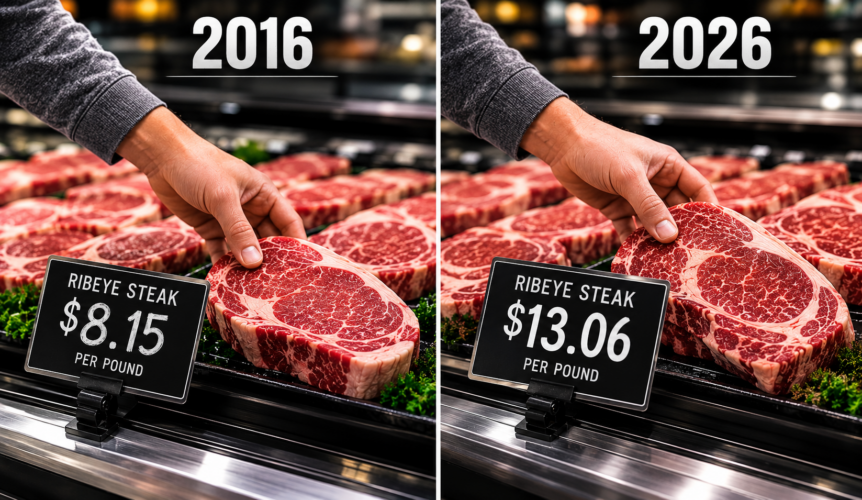
Politicians often treat inflation as a campaign talking point, blaming opposing parties. While this behavior fits into short soundbites, they obscure what actually drives up the cost of living.
Stripping away the partisan rhetoric reveals that inflation is primarily caused by two coordinated forces: loose monetary policy from the Federal Reserve and massive deficit spending from the federal government.
How the Fed’s Quantitative Easing Multiplies the Money Supply
While the Federal Reserve can adjust interest rates and reserve requirements, its most potent tool for expanding the money supply is Quantitative Easing (QE).
- Creating Digital Currency: The Fed generates new digital bank reserves out of thin air. While the Fed will argue that they aren’t technically “printing money,” the affect isn’t much different.
- Swapping Cash for Debt: The Fed uses these new reserves to buy government bonds (U.S. Treasuries) directly from commercial banks.
- Flooding the Economy with Liquidity: Banks exchange illiquid bonds for liquid cash reserves. This gives banks massive lending power to issue loans to consumers and businesses, rapidly expanding the broad money supply across the economy.
- The Simple Math Behind Inflation
Picture a simple economy with 10 apples and a total money supply of $10. Each apple costs exactly $1.00. If the money supply increases by 40% to $14 while orchards still produce only 10 apples, each apple now costs $1.40. The apples did not become 40% better or larger. Instead, the value of each dollar dropped because the volume of money expanded much faster than the supply of actual goods.
How the Fed Enables Government Deficit Spending
Federal spending operates through fiscal policy set by Congress and the president. According to data from the Congressional Budget Office and U.S. Treasury Fiscal Data, the federal government collects roughly $5 trillion in revenue but spends closer to $7 trillion annually, running massive annual deficits.
Federal Revenue Breakdown (Tax Intake):
- Individual Income Taxes: ~49% to 52%
- Payroll Taxes (Social Security / Medicare): ~32% to 34%
- Corporate Income Taxes: ~8% to 10%
- Customs Duties & Excise Taxes: ~5% to 7%
Federal Spending Breakdown:
- Mandatory Entitlements (Social Security, Medicare, Medicaid): ~60%
- Discretionary Programs (Defense and Non-Defense): ~25% to 27%
- Net Interest on the Debt: ~13% to 15%
To fund trillions in spending beyond what it collects in taxes, the government issues new Treasury debt. This is where the Fed steps in: by purchasing those newly issued Treasuries through QE, the Fed directly finances government deficit spending and prevents borrowing costs from spiking.
The Real-World Result: A Government Bidding War
When the government injects trillions of deficit-funded dollars into an economy, it outbids the private sector for finite resources.
For example, if Congress passes a massive infrastructure package, the government begins competing against everyday families for the same limited pool of contractors, steel, lumber, and concrete. Because new workers and materials cannot be created overnight, prices and wages rise rapidly to ration the limited supply. That price surge is passed down to everyday consumers as a higher cost of living.
Protecting Your Purchasing Power
Inflation acts as a quiet, regressive tax on your cash savings, investments, and retirement timeline. While you cannot change monetary policy or congressional budgets, you can control how your balance sheet is structured to protect against dollar dilution.
At Wealthnest Planners, we integrate comprehensive wealth management with dedicated tax planning to help shield your assets from inflation and preserve long-term purchasing power.
Wealthnest Planners and LPL Financial do not provide tax advice or services. Please consult your tax advisor regarding your specific situation.
https://www.cbo.gov/topics/budget/outlook-budget-and-economy